CSISS Updates
| Winter Season | From the Field | Communications & Engagement |
| Winter Online Workshop Series | Staff Updates | Captivating Content | Upcoming Events |
As the snow settles across the Columbia Shuswap region, our field season has officially come to a close. The CSISS team is reflecting on another impactful year of protecting our lands and waters from invasive species. From community weed pulls to aquatic outreach, 2025 has been a year of collaboration, education, and hands-on stewardship.
Even with the transition into winter, our work continues beyond the field. We are busy analyzing data, writing reports and strengthening partnerships to ensure a resilient start to 2026. This season is an important time to rest and reflect, but also to improve and prepare for next year’s outreach and field programs.
Thank you to everyone who joined a weed pull, tuned in to a webinar, or helped spread the word about invasive species this year. We hope to see you in the New Year.
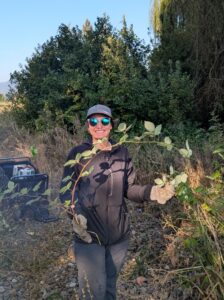
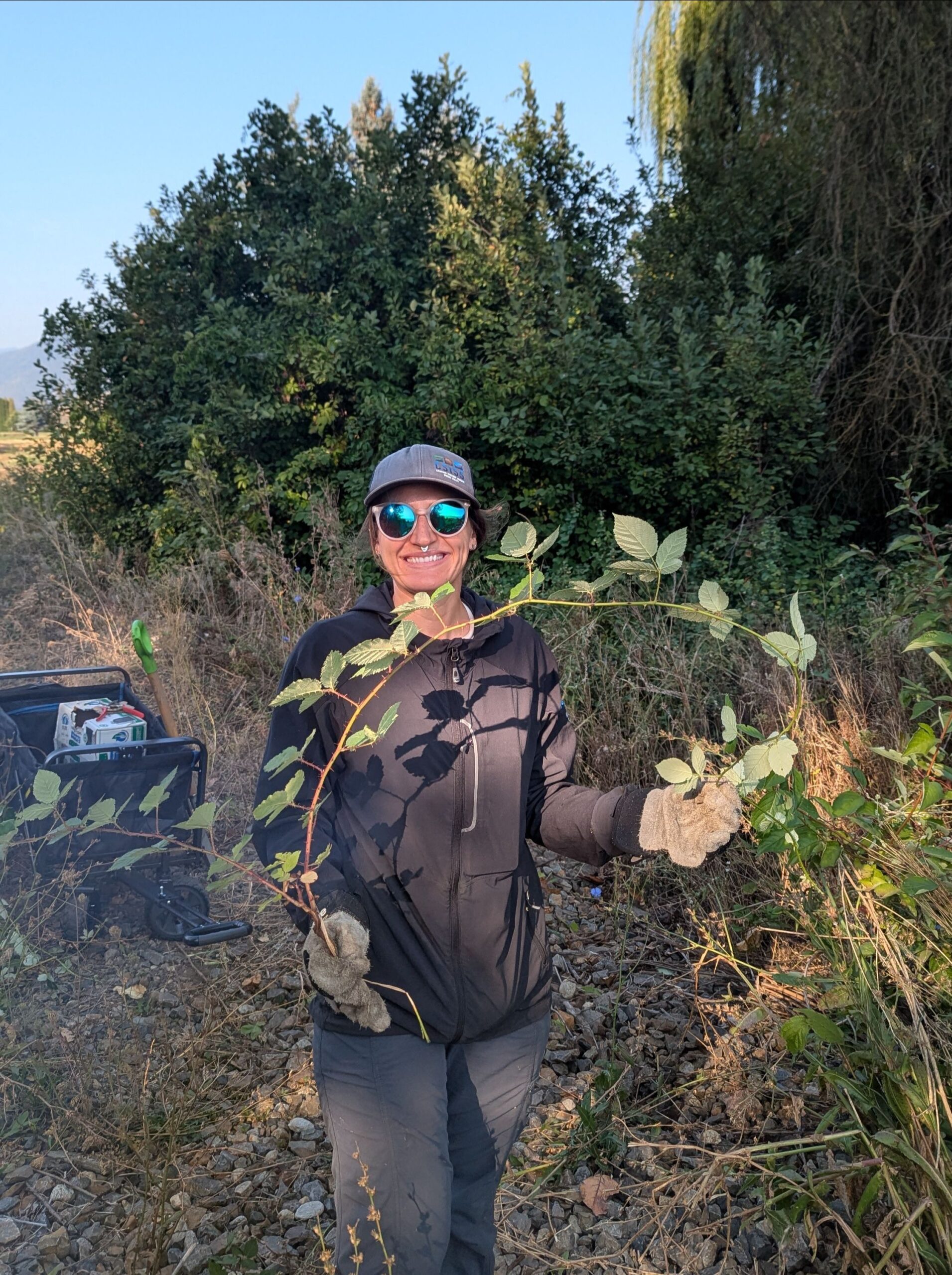
Field Technician Marlee Verleih digging up Himalayan blackberry on the Rail Trail
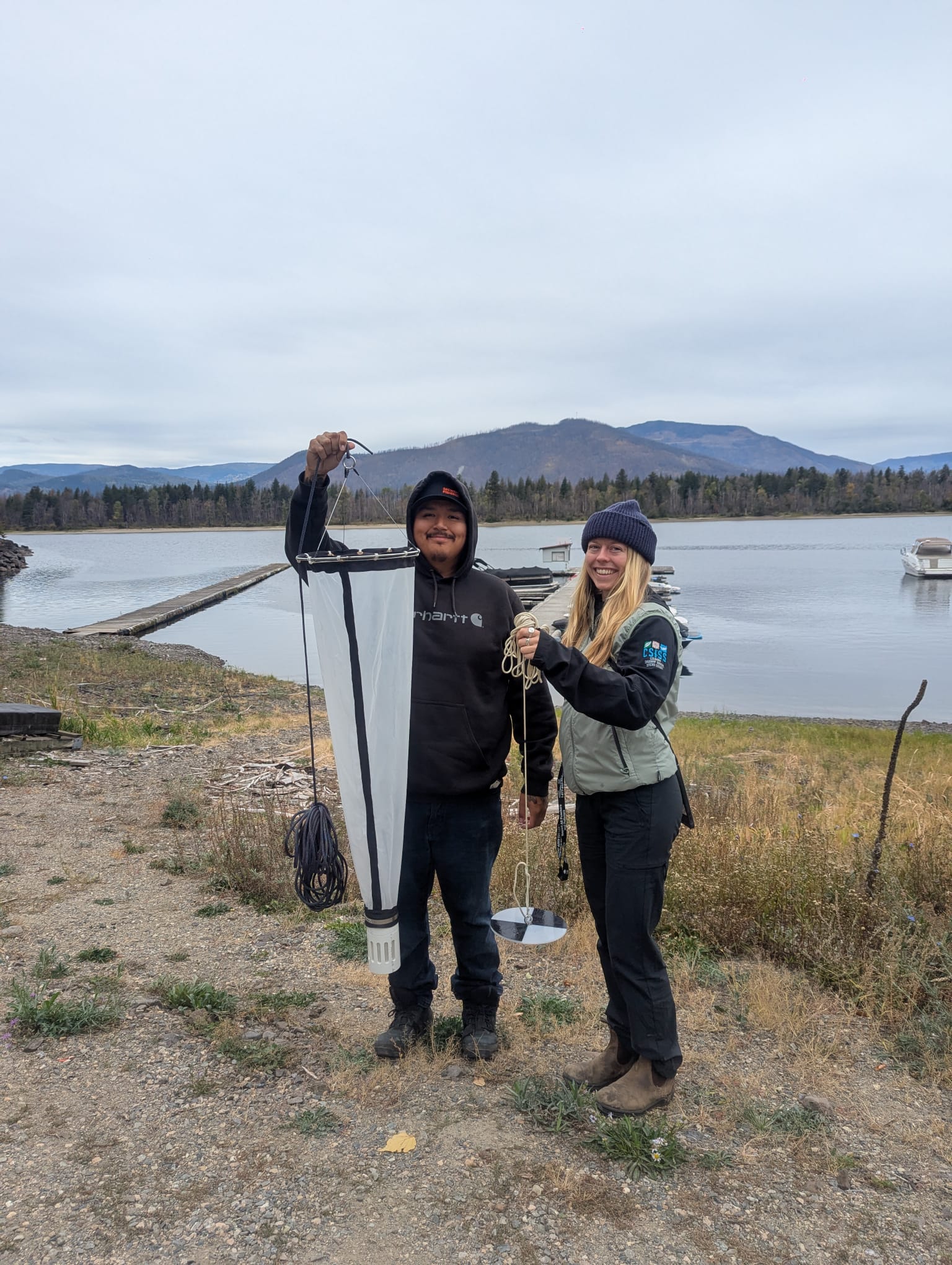
Field Technician Emma Wiebe with Henry from the Adam’s Lake Indian Band assisting on a ZQM sampling day in the Shuswap
From May to October, both the aquatic and the field teams are hard at work! The CSISS field team had a busy summer scouring the CSRD for priority invasive plants completing 1,112 invasive plant surveys at 303 sites across the region. They also completed 158 mechanical treatments at 84 priority locations removing 1745m2 of invasive plant material.
The CSISS aquatic field team could be seen tossing a net and installing substrate samplers across 14 priority water bodies and collected a total of 204 water samples as part of an early detection monitoring program for zebra and quagga mussels in the Columbia Shuswap. Thanks to ongoing monitoring and strong provincial prevention measures, to date, British Columbia remains free of zebra and quagga mussels!
Stay tuned for more highlights and the release of our 2025 Annual Report in the New Year.
This fall, CSISS continued to expand our outreach and connect with new audiences across the Columbia Shuswap region. Through consistent social media engagement, new episodes of the Invasive Insights podcast, and ongoing partnerships with local organizations, we amplified our messaging on invasive species prevention and responsible recreation.
Our fall outreach initiatives were supported through generous contributions from Tourism Revelstoke (TR), the Fish & Wildlife Compensation Program (FWCP), and the Habitat Conservation Trust Foundation (HCTF) Community Grant, which enabled us to offer high-quality programming and educational resources throughout the region.
Thank you to everyone who followed along, shared social media posts, or invited CSISS to present. We couldn’t do this without community collaboration! Stay tuned for our upcoming winter webinar series, where we’ll explore emerging invasive species issues and local success stories.
|
|
|
|
|
Thank you to our wonderful volunteers and partners who have attended our events and made huge efforts to remove invasive plants from our local landscape. |
A highlight of the season was our Thanksgiving Back community event, where 20 dedicated volunteers joined us to remove invasive plants and restore local habitat. Their efforts showcased the power of community action and strengthened local stewardship.
|
|
|
|
|
|
Photo: Common Mullein, an invasive species with cultural value. |
Cultural integration of invasive species
|
|
Jarić, I., Fernández-Llamazares, Á., Molnár, Z. et al. Cultural integration of invasive species. npj biodivers 4, 25 (2025)
|
|
| We loved reading this article as part of our monthly paper club! It really got us thinking about some local examples in our region where an invasive species has become culturally integrated. |
|
|
|
|
|
|
|
|
|
Headwaters Podcast
If you live in the Columbia Basin, you should make tuning in to the Headwaters Podcast part of your must listen to list. The latest podcast on ‘rascally rodents’ explores how we can navigate and manage these sometimes less welcome visitors to our homes. From the perspectives of ‘urban rat battlers’ and ‘experts’ alike.
|
|
|
|
|
|
Thank you for all the fantastic work!
We’re sending a big thank you and best wishes to two incredible team members
|
|
Emma Wiebe
Field Technician
Emma joined CSISS in 2022 as a Program Assistant and quickly became an integral and vibrant member of our team. This year, she truly shone in the field by taking the lead on invasive mussel sampling. She’s now off to the big city to pursue her dream of becoming a teacher. We are so grateful for her positive energy, creativity, and dedication to protecting our local ecosystems. Good luck Emma, you will be greatly missed!
|
|
|
|
|
|
Bishop Carasquero
Program Assistant
Bishop was a wonderful addition to the CSISS team during the summer of 2025. His passion for protecting local environments was both inspiring and contagious. He brought great energy to every outreach event and field day. As the winter begins, Bishop is off to work with another non-profit in Revelstoke. Be sure to say hello to him around town. Thank you for your enthusiasm, hard work, and humor!
|
|
|
|
2nd Annual International Invasive Species and Climate Change Conference (IISCCC)
Dec. 9-10 (online)
Biological invasions and climate change are global challenges that cross all borders. The IISCCC works to bring people together by creating space to share research, exchange management strategies, build networks, and support knowledge that can be applied on the ground.
This free, virtual conference will highlight a range of topics, including management success stories, pathway analysis and prevention, early-career research, and more.
You can register through the NAISMA website.
|
|
|
Growing Solutions: A National Conference for Advancing an Invasive-Free Horticulture Industry
Invasives Canada and the Ontario Invasive Plant Council
Dec. 11-12 (online)
This two-day virtual event will bring together industry professionals, researchers, Indigenous nations, policymakers, and community organizations to explore the role horticulture plays in the spread of invasive species.
The conference will provide a platform for sharing innovation, strengthening partnerships, and showcasing practices that help reduce the risk of invasive species spread through horticulture.
Registration is free!
|
|
|
INVASIVES 2026 Annual Forum and AGM
February 9 – 12, 2026 – New Westminster, BC
The INVASIVES Forum will bring together experts, leaders, and community members to explore emerging ideas and strategies in invasive species management. The 2026 theme is: One Landscape, One Future.
|
|
|
Annual Invasive Species Forum
February 17th-19th- Virtual
This annual event brings attention to invasive species issues, research, and advances in prevention and management occurring across Canada. The 2026 theme is: Progress Through Partnerships.
You can register here
|
|
|
Contact CSISS to book a training presentation for your organization at: info@columbiashuswapinvasives.org
Thank You to our Funders in 2025
We acknowledge the financial support of: the Province of British Columbia (through the Ministry of Forests, Ministry of Transportation and Transit, BC Parks and the Community Gaming Grant); the Columbia Shuswap Regional District; The Forest Enhancement Society of BC, the Columbia Basin Trust, the Habitat Conservation Trust Foundation (Invasive Mussel Lake Monitoring Grant and Community Grant); The Nature Trust of BC; The City of Salmon Arm; Parks Canada; BC Hydro (including Fish and Wildlife Compensation Program and Broad Impact Grant); the Shuswap Watershed Council; Employment and Social Development Canada (Canada Summer Jobs); Eco Canada (Science Horizons Wage Subsidies); the City of Revelstoke; the Golden Rod and Gun Club; the Shuswap North Okanagan Rail Trail; and Canadian Parks and Recreation Association (CPRA) Green Jobs Initiative(funded by Government of Canada through Parks Canada, as part of their commitment to the Youth Employment and Skills Strategy program). We acknowledge the in kind support and partnership with several other organizations across the region.