See full press release here: Stop the spread of spongy moth in B.C.
Stop the spread of spongy moth in B.C.
Spongy moth (Lymantria dispar) is an invasive insect native to Europe, Asia, and North Africa. Populations of the moth are found in B.C. every year, but are not yet permanently established in the province. Spongy moths are defoliators, meaning they feed on tree leaves and needles, reducing tree growth, with large and yearly outbreaks causing tree mortality. These invasive defoliators mainly prey on oaks, but will also target birch, poplar, maple, alder, willow, cherry, pine, spruce, and hemlock. The infestation of spongy moth is a looming threat for B.C. fruit producers. They will eat the leaves of over 300 species of trees and shrubs, including hazelnut, blueberry, and especially apples. Spongy moths can also cause significant economic damage to the forestry and tree nursery industries. Adult females will lay up to 1000 eggs in a brown, fuzzy egg mass in mid to late summer. The egg masses then survive winter and caterpillars hatch in the spring. Adult female spongy moths cannot fly, therefore the spread of these invasive insects into new areas are often due to humans.
More information on the spongy moth here!
Best practices to follow
Check for hiding moths or egg masses! They are often found on tree trunks or in rock crevices, though they can also be found on outdoor items such as sheds, furniture, gardening or sports equipment, and lawn ornaments. When traveling, check your campers and trailers before your next trip, to not accidentally transport these moths to new areas. Storing your items for winter is a great time to check all your furniture and equipment!
If you find a spongy moth egg mass, larvae, caterpillar, or moth, please report all sightings to the Canadian Food Inspection Agency!
Buy local, burn local!
Spongy moths and other invasive insects are often transported in firewood.
- Buy firewood within 80km of where you are burning it
- Order winter firewood from a local vendor
- If you accidentally transported firewood, burn it first and completely
- Leave leftover firewood for the next visitor
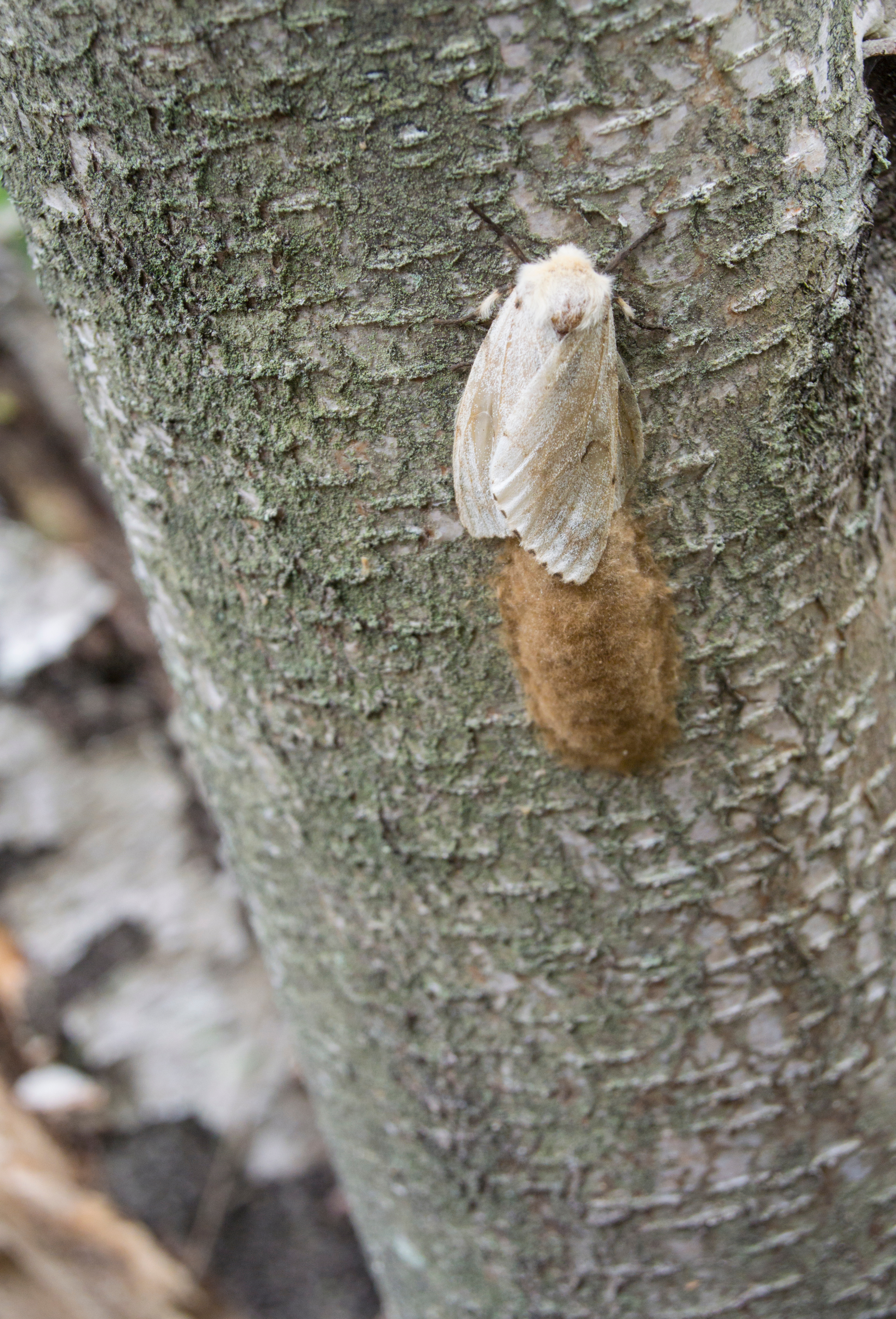
Adult female moth with egg mass on birch tree (Invasive Species Centre)

Adult female (left) and adult male (right) spongy moth (CFIA)

Mature spongy moth larva on a red oak leaf (Thérèse Arcand)
For media inquiries or more information, please contact Robyn Hooper, Executive Director at info@columbiashuswapinvasives.org